
The Print Buyer's Guide to Art Sizing: How to Choose the Right Size for Any Room and How to Place it
One of the most common dilemmas when buying a print is figuring out what size to get. You fall in love with a piece, add it to your cart — and then freeze. Will it look too small? Too overwhelming? Will it actually work above the sofa?
The good news: there are some tried-and-true guidelines that take the guesswork out of sizing. This guide walks you through the best print dimensions for four of the most common spaces in your home — living rooms, bedrooms, home offices, and gallery walls — so you can buy with confidence.
Why Size Matters More Than You Might Think
A print that's too small for a wall will look like a postage stamp — lost and unintentional. One that's too large can feel oppressive. Getting the scale right is what makes art feel designed into a room rather than just dropped in.

A print that's too small for a wall will look like a postage stamp
A simple rule of thumb to keep in your back pocket: art should fill roughly 57–75% of the wall width it hangs on, or about 2/3 to 3/4 of the width of the furniture it sits above. When in doubt, go slightly larger — people far more often regret going too small than too big.
Living Rooms & Large Walls
The living room is the most common home for statement art, and it rewards bold sizing choices.
Good sizes to consider: 24×36 in, 30×40 in, 36×48 in, or larger
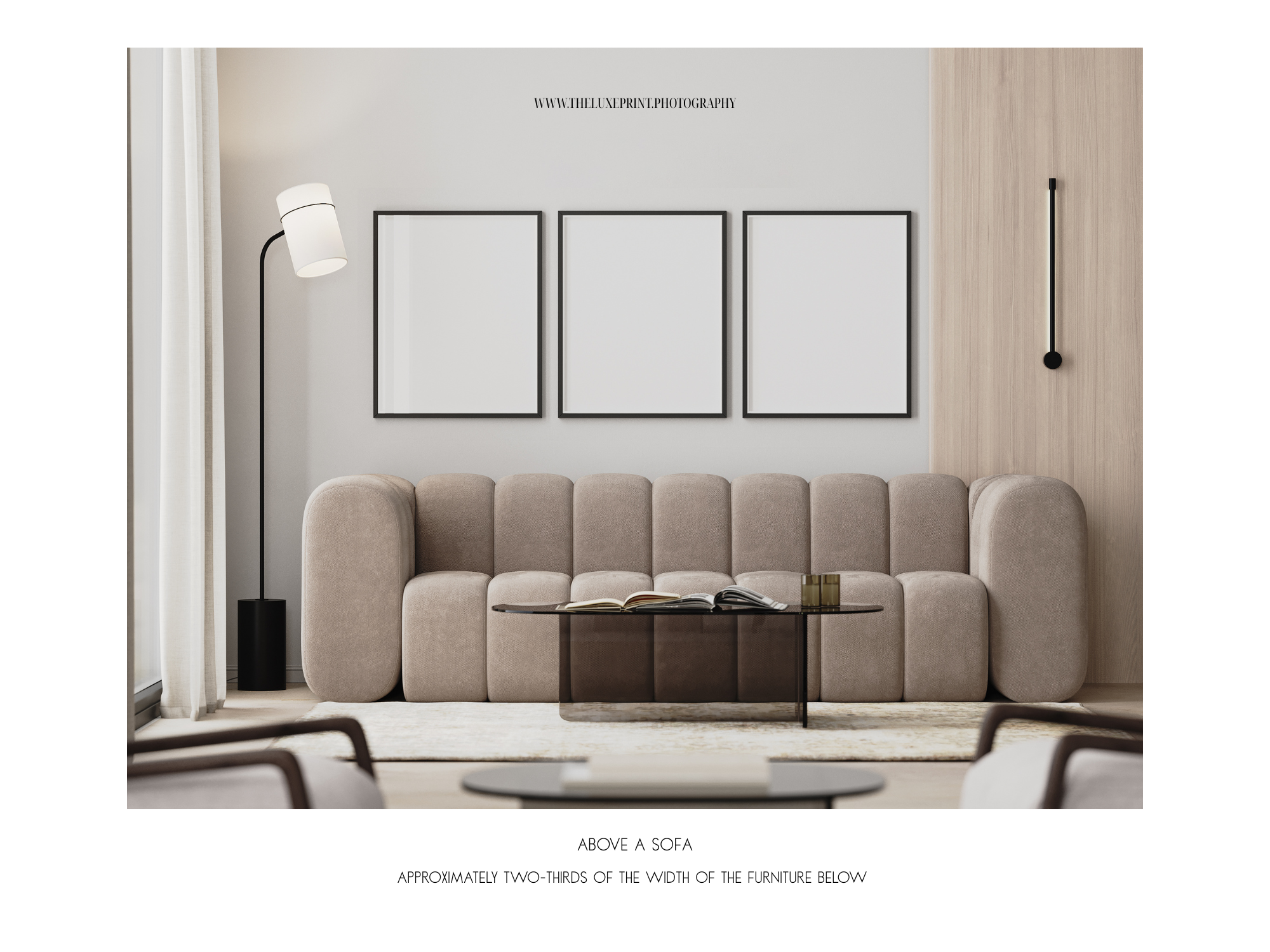
Above your sofa: This is the classic placement, and proportion is everything here. Your print should be roughly 2/3 the width of your sofa — so for a standard 84-inch (7 ft) sofa, look for a piece at least 48–56 inches wide. If a single print that size feels like a stretch, consider a diptych (two panels) or triptych — they're a great way to achieve that width while keeping things dynamic.
Above a fireplace: Your fireplace is already a focal point, so lean into it. A print that fills most of the mantel width — typically 36–48 inches wide — makes a strong statement. Just avoid going wider than the mantel itself.
On a large open wall: This is where you can really go for it. For a wall that's 8–10 feet wide without furniture to anchor it, a 36×48 or even 40×60 inch print can be genuinely stunning. A curated gallery wall (more on that below) is another great option for filling a large expanse.
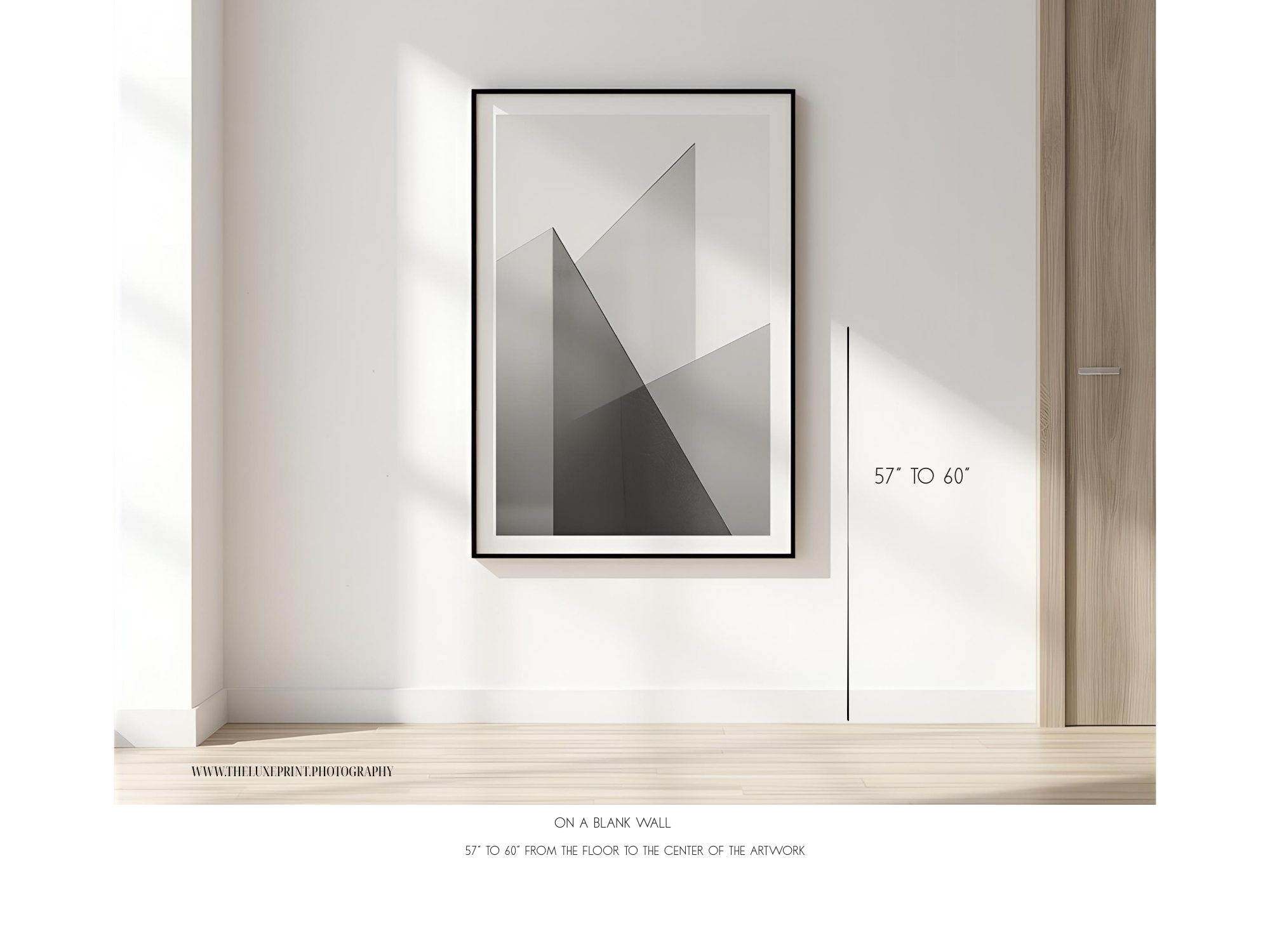
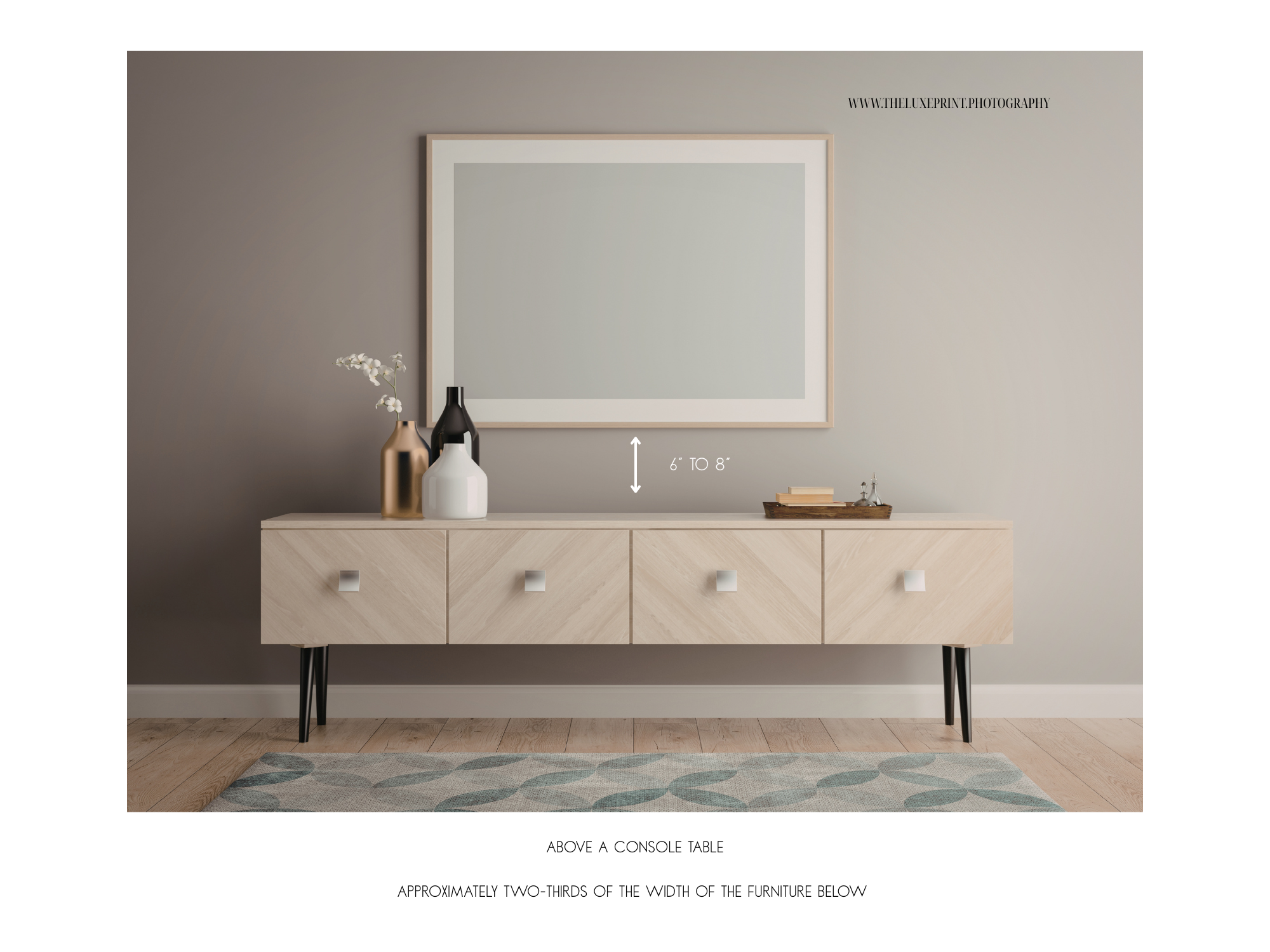
Where to hang it: The center of your artwork should sit at approximately 57-60 inches from the floor — that's roughly eye level for most people. When hanging above furniture, leave 6–8 inches of space between the top of the piece and the bottom of the frame.
Bedrooms
Bedrooms call for a slightly more intimate approach to scale, though the same proportional thinking applies.
Good sizes to consider: 18×24 in, 20×30 in, 24×36 in
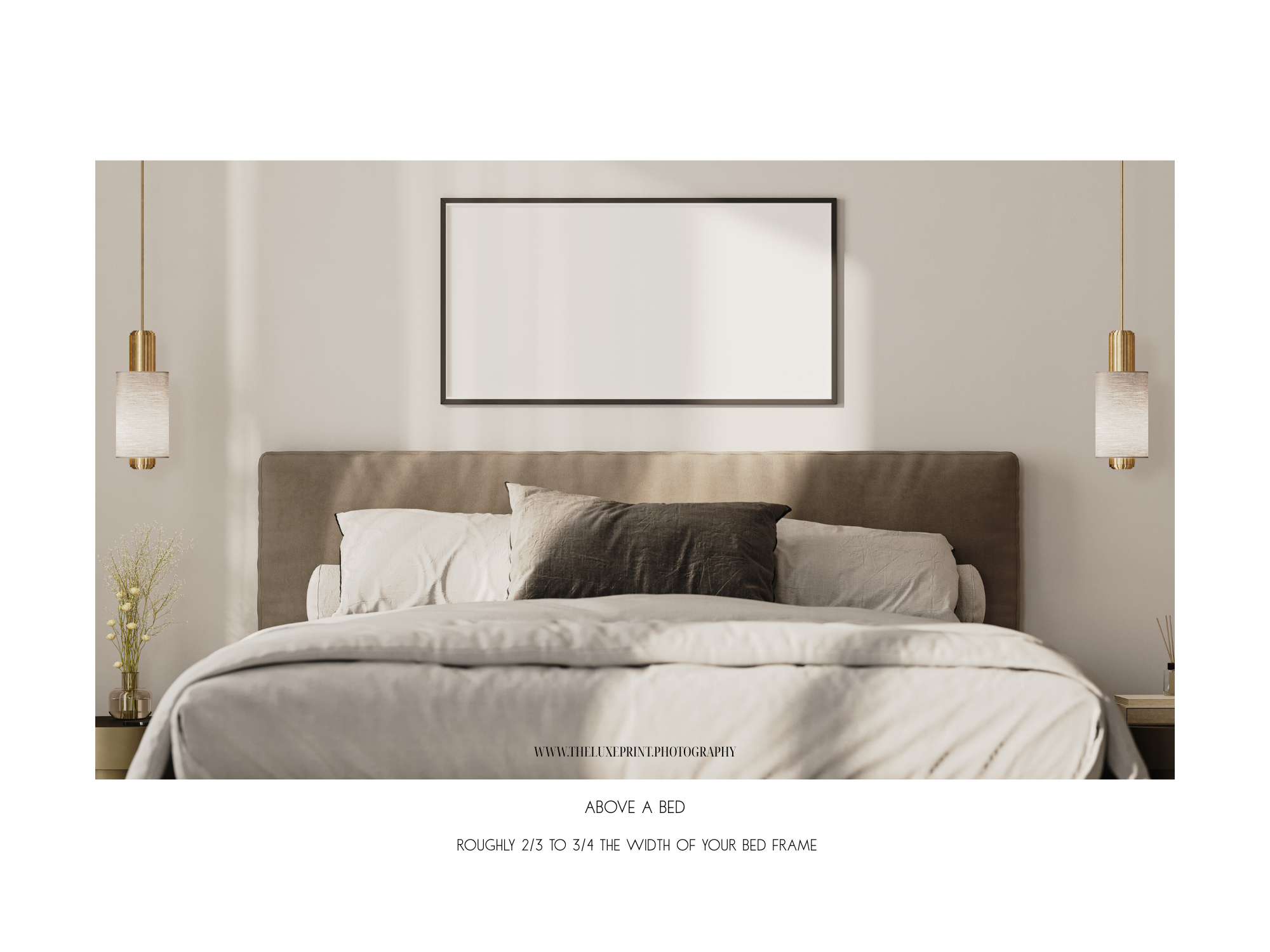
Above your bed: Your headboard wall is the bedroom's version of the sofa wall. Aim for a print that spans roughly 2/3 to 3/4 the width of your bed frame. For a queen bed (typically 60 inches wide), that means looking for something around 40–48 inches wide. For a king (76 inches), 50–60 inches is the sweet spot or two vertical …
A pair of prints flanking the bed: Rather than one large piece, two matching or complementary prints — one on each side, above the nightstands — is a clean and elegant alternative. This is a great use for smaller sizes like 11×14 or 12×16, since they'll be viewed up close.
On an accent wall: If your bedroom has a dedicated accent wall, treat it more like a living room scenario. A single 24×36 or 30×40 piece can anchor the entire room beautifully.
Office & Workspace
Your workspace is more personal than almost any other room — and art plays a big role in making it feel inspiring rather than sterile.
Good sizes to consider: 11×14 in, 12×18 in, 16×20 in, 18×24 in
Behind your desk (video calls): If you're on video calls regularly, what's behind you matters. Art in this spot is seen at a reduced scale on other people's screens, so pieces with strong contrast, bold composition, or clear imagery tend to read better than intricate detail. A single 18×24 or 24×30 print hung behind and slightly above head height is a solid, professional-looking choice.
On a feature or inspiration wall: If you have a dedicated wall in your office for visuals and motivation, treat it similarly to a living room feature wall. A 24×36 single print or a small curated arrangement both work well here.
On shelves or your desk: Don't underestimate smaller prints in the 5×7 to 8×10 range, propped against the wall on a shelf or ledge. They're low-commitment, easy to swap out, and add a lot of personality to a workspace.
Gallery Walls
A gallery wall is one of the most rewarding ways to display art — and one of the most forgiving, because the arrangement itself becomes the design.
Good sizes to build with: A mix of 5×7, 8×10, 11×14, and 16×20
The core principle: Variety in size creates visual rhythm; consistency in color palette, subject, or frame style creates cohesion. You don't need everything to match — you just need a thread that ties things together.
How to plan your layout: Start by anchoring your arrangement with one larger piece (16×20 or 18×24) and build outward with smaller prints. The overall cluster should leave roughly 6–12 inches of breathing room on each side of the wall.
Three formats that work well:
The grid: Uniform sizes (e.g., all 8×10) in a clean, symmetrical arrangement. Ideal for modern or minimalist spaces.
The salon hang: Mixed sizes arranged organically, with the visual center of the arrangement sitting at eye level. This style feels layered and eclectic — great for living rooms and hallways.
The horizontal row: Three to five prints of the same height hung in a single line. A natural fit for hallways or above long furniture like a console table.
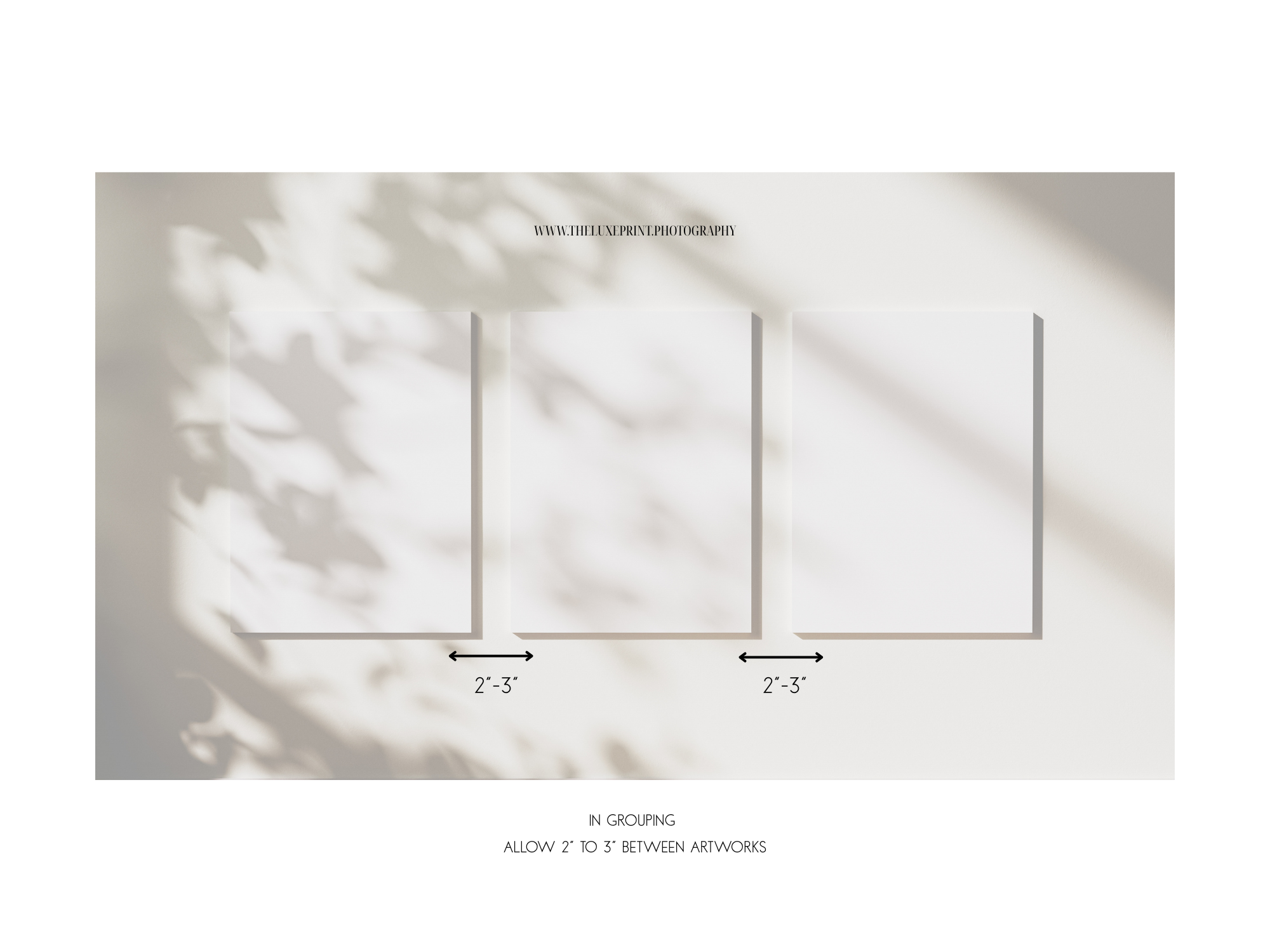
Spacing tip: Aim for 2–3 inches between frames. More than 4 inches and the pieces start to feel disconnected; less than 1.5 and things feel cluttered.
Quick Reference
Space Placement Recommended Size
Living room Above 7-ft sofa 48"+ wide (single or multi-panel)
Living room Above fireplace 36–48" wide (no wider than the mantle)
Bedroom Above queen bed 40–48" wide
Bedroom Above king bed 50–60" wide
Bedroom Nightstand accent 11×14 or 12×16
OfficeVideo call background 18×24 or 24×30
OfficeFeature wall 24×36
Gallery wall Anchor piece 16×20 or 18×24
Gallery wall Supporting pieces 5×7, 8×10, 11×14
Still Not Sure?
When in doubt, grab a roll of painter's tape and mock up the dimensions on your wall before you order. It takes five minutes and will immediately tell you whether a size feels right in your specific space. And remember — if you're torn between two sizes, the larger one is almost always the better choice!
